

Stem cells have properties of self-renewal and the ability to differentiate into different cell types. The stem cells are the repairing cells of the body present mainly in the hollow of the bones in adults. The spongy tissue known as the bone marrow is aspirated to harvest stem cells in adults. The stem cell therapy also known as regenerative medicine has been used recently in a number of diseases including avascular necrosis.
The avascular necrosis (osteonecrosis) of the head of the femur results from disruption or impedance of the blood flow to the bone. The bones in our body are living tissues that require blood supply for their healthy function. The bones have a constant turnover which is dependent on intact blood supply.
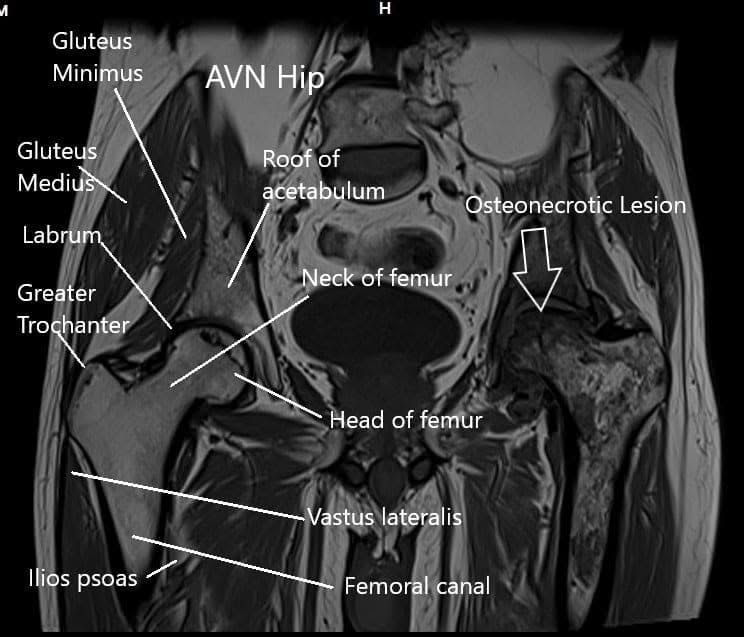
Avascular Necrosis of the head of the femur.
The disruption of the blood supply of the head of the femur may result from a direct injury such as fractures, dislocations, or surgeries around the hip. The nontraumatic causes include corticosteroid abuse or long term alcohol intake. Certain medical conditions resulting in excess of clotting cells/factors may also lead to osteonecrosis of the head of the femur.
The disruption of blood supply leads to a cascade of events causing bone death. The body tries to revascularize the dead bone and lays down new bone. The process is impeded by decreased blood flow and increased pressure inside the head of the femur. The dead bone ultimately results in the collapse of the spherical surface of the head.
The collapsed head results in the loss of spherical contour. This results in attrition causing arthritic changes in the head of the femur and the cup of the acetabulum. The patient experience debilitating hip pain and loss of movements about the hip joint. The day to day activities of the patients may be severely affected.
A greater number of affected patients happen to be in an active age group and may require joint replacement in advanced stages. Regenerative therapy has a role to play in the early stages of avascular necrosis of the hip i.e before the collapse of the spherical surface.
The early stages of avascular necrosis are usually diagnosed on an MRI or a bone scan. There are usually no X-ray findings in the early stages of osteonecrosis. The stem cells have an ability to change into bone cells and repair the damage caused by the dead bone. The repaired area is revascularized by stem cells forming blood vessels.
There are mainly two types of stem cells, embryonic stem cells, and adult stem cells. The adult stem cells may be harvested from the bone marrow, fat cells, or the blood. The embryonic stem cells are harvested from human embryos restricting their use due to ethical considerations.
The bone marrow-derived stem cells are commonly used in the treatment for early stages of avascular necrosis of the hip joint. After appropriate anesthesia, the bone marrow is aspirated from a part of the pelvic bone known as the iliac crest. The marrow aspirate is then spun in a specialized machine to get a concentrate of stem cells.
The concentrated stem cells are then injected in the area of the necrosed bone under intraoperative X-ray guidance. The stem cells are also used in conjecture with other joint preservation techniques such as core decompression of the head of the femur.
The patients are usually able to go home the same day of the procedure. They are advised partial weight-bearing for 4-6 weeks when performed along with core decompression. The patients are also advised to avoid high impact activities. They are followed every 6 months to monitor the progression of the avascular necrosis.
Stem cell therapies have shown significant benefits in the regeneration of the avascular area of the bone. Unfortunately, avascular necrosis progresses in a number of patients to advanced stages.
In advanced stages, a total hip replacement provides excellent relief from pain and the patients are quickly able to get back to the activities they enjoy. The joint replacement surgery has revolutionized the treatment of advanced cases of avascular necrosis of the head of the femur.
Read more about Avascular Necrosis of the Hip Joint here.
Do you have more questions?
How effective is stem cell therapy compared to other treatments for avascular necrosis of the hip, such as core decompression or joint replacement surgery?
Stem cell therapy is a relatively newer approach for treating avascular necrosis of the hip, and its effectiveness compared to traditional treatments like core decompression or joint replacement surgery is still being evaluated. While some studies and clinical trials have shown promising results in terms of pain relief and improvement in hip function, more research is needed to determine the long-term outcomes and effectiveness of stem cell therapy. Additionally, the success of any treatment depends on various factors such as the stage of the disease, the patient’s overall health, and the expertise of the healthcare provider performing the procedure. It’s essential to discuss the potential benefits and risks of each treatment option with your orthopedic surgeon to determine the most appropriate course of action for your specific condition.
Are there any risks or complications associated with stem cell therapy for avascular necrosis of the hip?
As with any medical procedure, there are potential risks and complications associated with stem cell therapy for avascular necrosis of the hip. These can include infection at the injection site, bleeding, allergic reactions to anesthesia or other medications used during the procedure, and rare but serious adverse events such as damage to surrounding tissues or nerves. Additionally, while stem cell therapy is generally considered safe, there is still ongoing research to fully understand its long-term effects and efficacy for treating avascular necrosis. It’s essential to discuss potential risks and benefits with your healthcare provider before undergoing any treatment.
How long does it typically take to see results from stem cell therapy for avascular necrosis of the hip?
The timeline for seeing results from stem cell therapy for avascular necrosis of the hip can vary depending on several factors, including the severity of the condition, the individual patient’s response to treatment, and whether the therapy is combined with other interventions such as core decompression. In some cases, patients may begin to experience improvements in symptoms within a few weeks to months after the procedure, as the injected stem cells work to repair damaged bone tissue and promote new blood vessel growth. However, it’s essential to note that stem cell therapy is not a quick fix, and full regeneration of the affected bone may take several months to a year or longer. Regular follow-up appointments with your healthcare provider can help track progress and adjust treatment plans as needed.
Are there any risks or potential complications associated with stem cell therapy for avascular necrosis of the hip?
As with any medical procedure, there are potential risks and complications associated with stem cell therapy for avascular necrosis of the hip. These may include infection at the injection site, allergic reactions to anesthesia or other medications used during the procedure, and the possibility of inadequate or incomplete healing of the affected bone tissue. Additionally, there may be a risk of unintended effects on surrounding tissues or organs, although such occurrences are rare when the procedure is performed by experienced medical professionals using proper techniques and precautions. It’s essential for patients to discuss these potential risks with their healthcare provider before undergoing treatment and to follow all pre- and post-procedure instructions carefully to minimize the likelihood of complications
Are there any age restrictions or limitations for undergoing stem cell therapy for avascular necrosis of the hip?
Stem cell therapy for avascular necrosis of the hip is generally considered safe and effective across a wide range of age groups. However, the suitability of the treatment may vary based on individual factors such as overall health, bone density, and the extent of hip joint damage. It’s essential for patients to undergo a comprehensive evaluation by a healthcare provider specializing in orthopedics to determine if they are suitable candidates for stem cell therapy.
How long does it typically take to see results after undergoing stem cell therapy for avascular necrosis of the hip?
In most cases, patients may start to notice improvements in their symptoms within a few weeks to months after undergoing stem cell therapy for avascular necrosis of the hip. However, the exact timeline for experiencing significant relief can vary depending on factors such as the extent of bone damage, individual healing response, and adherence to post-procedure rehabilitation protocols. It’s essential for patients to maintain regular follow-up appointments with their healthcare provider to monitor progress and adjust treatment as needed.
Are there any contraindications or medical conditions that would make a patient ineligible for stem cell therapy for avascular necrosis?
Patients with active infections, certain blood disorders, or a history of cancer may be ineligible for stem cell therapy due to increased risks or potential interference with treatment outcomes. Each patient’s medical history is carefully evaluated to determine candidacy.
What measures are taken to ensure the safety and sterility of the stem cell harvesting and injection process?
Strict protocols are followed to maintain sterility during stem cell harvesting and injection procedures. This includes using a sterile environment, proper disinfection of equipment, and adherence to aseptic techniques to minimize the risk of infection.
Can stem cell therapy be performed on both hips simultaneously, or is it typically done one hip at a time?
Stem cell therapy can be performed on both hips simultaneously if both are affected by avascular necrosis. However, the decision to treat one or both hips at the same time depends on factors such as the patient’s overall health and the extent of the disease.
Are there different types of stem cells used in therapy for avascular necrosis, and if so, how do they differ in terms of effectiveness and safety?
The most commonly used stem cells for avascular necrosis are bone marrow-derived mesenchymal stem cells. These have shown effectiveness in promoting bone regeneration and have a favorable safety profile compared to other types of stem cells.
Is stem cell therapy covered by insurance for the treatment of avascular necrosis, or is it considered an elective procedure?
Coverage for stem cell therapy varies depending on the patient’s insurance plan and the specific circumstances of their condition. While some insurance providers may cover it for certain indications, others may consider it elective and not covered.
What is the typical recovery timeline following stem cell therapy for avascular necrosis, and when can patients expect to see improvements in symptoms?
Patients may experience gradual improvements in symptoms over several weeks to months following stem cell therapy. However, individual recovery timelines can vary based on factors such as the extent of bone damage and the patient’s overall health.
Are there any lifestyle modifications or dietary recommendations that can enhance the effectiveness of stem cell therapy for avascular necrosis?
Maintaining a healthy lifestyle with regular exercise and a balanced diet rich in nutrients essential for bone health can support the effectiveness of stem cell therapy. Avoiding smoking and excessive alcohol consumption is also advisable.
How soon after diagnosis should stem cell therapy be initiated for avascular necrosis, and is there an optimal window of opportunity for treatment?
Early intervention with stem cell therapy is preferred, ideally in the early stages of avascular necrosis before significant bone collapse occurs. However, it can still be beneficial in later stages to slow disease progression and alleviate symptoms.
What criteria are used to determine if a patient is a suitable candidate for stem cell therapy for avascular necrosis?
Patient selection criteria typically include factors such as the stage of avascular necrosis, overall health status, response to conservative treatments, and absence of contraindications like active infection or cancer.
Can stem cell therapy be used in combination with other treatments, such as medication or physical therapy, for avascular necrosis of the hip?
Yes, stem cell therapy can be complemented by other treatments like medication for pain management and physical therapy for rehabilitation. Combining therapies may enhance overall outcomes and promote better functional recovery.
Is stem cell therapy considered a permanent solution for avascular necrosis, or are repeat treatments often necessary?
Stem cell therapy can provide long-term relief and potentially halt the progression of avascular necrosis. However, repeat treatments may be necessary for some patients, especially if the condition progresses or if symptoms recur over time.
What are the potential risks or complications associated with stem cell therapy for avascular necrosis?
While stem cell therapy is generally considered safe, potential risks include infection, bleeding, and allergic reactions. Additionally, there is a theoretical risk of tumor formation, although this is extremely rare.
Are there any age restrictions or limitations on who can undergo stem cell therapy for avascular necrosis of the hip?
There are typically no strict age restrictions for stem cell therapy in avascular necrosis. However, candidacy depends more on the patient’s overall health status, severity of the condition, and response to other treatments rather than age alone.
How effective is stem cell therapy compared to other treatments for avascular necrosis of the hip, such as core decompression or total hip replacement?
Stem cell therapy has shown promising results in promoting bone regeneration and reducing symptoms in early stages of avascular necrosis. Compared to other treatments, it may offer a less invasive option with the potential to delay or avoid the need for total hip replacement.
The content on this page has been authored, edited, or approved by the doctors below, and was last reviewed for accuracy on May 1, 2026.