
Laser spine surgery is a minimally invasive procedure used to treat various spinal conditions, particularly those related to herniated discs or nerve compression. It involves the use of focused light energy to remove or shrink tissues that are causing pain or nerve impingement. Laser spine surgery offers a potential alternative to traditional spine surgery, aiming to reduce the invasiveness, recovery time, and complications associated with more conventional methods.
How Common It Is and Who Gets It? (Epidemiology)
Spinal conditions like herniated discs, degenerative disc disease, and spinal stenosis are common, especially among the elderly. As populations age, the incidence of these conditions, and the need for treatments such as laser spine surgery, is on the rise. However, laser spine surgery is typically considered for a select group of patients, including those with non-degenerative issues like herniated discs or pinched nerves, as well as those who do not have major spinal deformities or stenosis.
Why It Happens – Causes (Etiology and Pathophysiology)
The need for spine surgery arises from conditions that affect the spine’s structure, such as degenerative disc disease, herniated discs, or spinal stenosis. These conditions cause the discs between the vertebrae to lose height or integrity, resulting in pressure on nearby nerves. This can lead to pain, numbness, or weakness in various parts of the body. Laser spine surgery aims to alleviate these symptoms by using focused energy to treat the affected tissue with minimal invasion.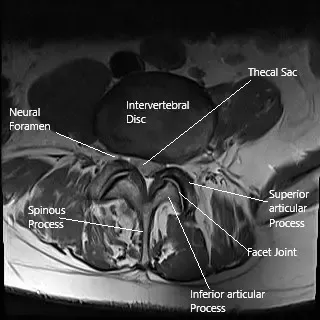
Laser spine surgery may be used to treat herniated intervertebral disc as seen on this axial MRI section of the lumbar spine.
How the Body Part Normally Works? (Relevant Anatomy)
The spine is made up of vertebrae separated by intervertebral discs. These discs act as cushions, allowing the spine to absorb shock and maintain flexibility. When a disc bulges or ruptures, it can press against the spinal cord or nerves, causing pain, weakness, and numbness. Laser spine surgery targets the problem area, typically a herniated disc, to relieve pressure on the nerves and alleviate the symptoms.
What You Might Feel – Symptoms (Clinical Presentation)
Symptoms of spinal issues that may require laser spine surgery include chronic back pain, radiating pain down the legs or arms, numbness, tingling, and weakness. The pain is often aggravated by movement and can limit mobility. In some cases, patients may experience difficulty standing or walking due to nerve compression.
How Doctors Find the Problem? (Diagnosis and Imaging)
To diagnose conditions that might benefit from laser spine surgery, doctors typically perform a thorough physical examination, including checking for neurological deficits. Imaging techniques such as X-rays, MRIs, and CT scans are used to assess the structure of the spine, the extent of any disc damage, and the level of nerve compression. These images help determine the most appropriate treatment plan.
Classification
Laser spine surgery is not used for all spinal conditions. It is most commonly used for herniated discs and conditions causing nerve compression. For patients with advanced degenerative conditions, such as severe stenosis or spinal deformities, traditional or minimally invasive surgeries may be more appropriate.
Other Problems That Can Feel Similar (Differential Diagnosis)
Other conditions such as spinal stenosis, spondylolisthesis, or muscle strain can cause symptoms similar to those of herniated discs. It is crucial for healthcare providers to distinguish between these conditions to ensure that laser spine surgery is the most effective treatment.
Treatment Options
Non-Surgical Care:
Initial treatment for spinal conditions often includes medications (e.g., NSAIDs), physical therapy, and lifestyle modifications such as rest and posture correction. For patients who do not respond to conservative treatments, surgery, including laser spine surgery, may be recommended.
Surgical Care:
Laser spine surgery can be used as a minimally invasive alternative to traditional open spine surgery, particularly for herniated discs or conditions causing nerve compression. Other surgical options include discectomy, laminectomy, or fusion surgery, depending on the specific condition.
Traditional Approach
Traditional spine surgeries involve an incision in the back, side, or front of the spine’s affected segment. The surgeon carefully dissects and separates the tissues to reach the involved segment. The surgeon may then correct the problem using instruments that may involve cutting, removing, or fusing bones.
While there are benefits of adequate visualization by anatomical landmarks in the traditional open approach, there may be increased postoperative pain and slower recovery. The more tissues are cut during the surgery, the longer the body takes to recover from the surgery.
Minimally Invasive Surgery
With the advent of newer instruments and tools, open spine surgeries have mainly been replaced with minimally invasive techniques. The minimally invasive procedures utilize smaller incisions and minimum trauma to the soft tissues to reach the spinal segment. Minimally invasive cervical fusion and minimally invasive lumbar fusion are done using tunnels that separate the tissues instead of cutting.
The minimally invasive spine surgery (MISS) techniques lead to a faster recovery and rehabilitation than open surgery. Endoscopic spine surgery is another form of minimally invasive spine surgery where an operating microscope can visualize the operating area through a keyhole incision.
Another advantage of minimally invasive surgery is that it may be performed in an outpatient setting, and the patients may go home the same day of the procedure. The rates of infection, post-operative pain, and other complications are also significantly less than an open technique.
Laser Spine Surgery
Laser spine surgery is a form of minimally invasive surgery that utilizes the laser’s heat energy instead of traditional instruments. A laser discectomy is a common laser spine surgery to shrink the size of the herniated intervertebral disc. The laser may also be used to remove structures other than discs, such as ligaments that may impinge upon the nerves.
A typical laser discectomy procedure may be performed in an outpatient setting. A local anesthetic may be used to numb the skin overlying the affected segment. The surgeon then introduces the laser probe through a percutaneous incision to the site of the affected spine. The laser probe’s position is determined via an intraoperative image intensifier.
The laser is then used to heat the targeted tissue to relieve the pressure off the impinged nerve. The target may be an intervertebral disc or any soft tissue structures such as ligaments. Laser spine surgery may also be used to target spinal tumors selectively.
The patients can quickly get back to their daily routines and report less postoperative pain compared to traditional surgery. The risks of intraoperative bleeding and post-op infection are also less as minimal tissue is cut during the surgery.
However, laser spine surgeries are not inherently safer than traditional or minimally invasive techniques. While less tissue is dissected or separated during laser spine surgery, the laser’s heat may damage the nerves/spinal cord if not appropriately directed. The laser energy also cannot maneuver around the tissues, adding to the dangers of inadvertent cartilage, bone, ligament, or nerve damage.
The laser energy cannot cut through the bone, so the patients with conditions such as spinal canal stenosis are not candidates for laser spine surgery. Similarly, laser spine surgery is not beneficial in patients with spinal deformity and other spine degenerative conditions.
While laser spine surgery may be successfully used to treat conditions such as discectomy, frequently, patients may need more laser procedures. Although laser spine surgery is promising, there is limited data to prove its efficacy over other surgical techniques such as minimally invasive spine surgery.
Advantages and Risks of Laser Spine Surgery
Laser spine surgery offers several advantages over traditional and other minimally invasive techniques. Patients often experience less postoperative pain and quicker recovery times. The risk of intraoperative bleeding and postoperative infection is lower due to the minimal tissue cutting involved.
However, laser spine surgery is not inherently safer. The heat from the laser can potentially damage nerves or the spinal cord if not correctly directed. Additionally, the laser energy cannot maneuver around tissues, posing risks of inadvertent damage to cartilage, bone, ligaments, or nerves. Moreover, lasers cannot cut through bone, making this surgery unsuitable for conditions like spinal canal stenosis or spinal deformities.
While laser spine surgery can be effective for procedures like discectomy, patients often require additional laser treatments. Despite its promise, there is limited data proving its efficacy over other surgical techniques like minimally invasive spine surgery.
Recovery and What to Expect After Treatment
After laser spine surgery, most patients experience immediate relief from pain. Recovery typically involves minimal downtime, with many patients able to return to light activities within a few days. Full recovery, however, may take several weeks. Physical therapy is often recommended to help restore strength and mobility.
Possible Risks or Side Effects (Complications)
While laser spine surgery is minimally invasive, it still carries risks. Potential complications include nerve injury, infection, bleeding, or damage to surrounding tissues. The heat generated by the laser can also cause damage if not carefully controlled. In rare cases, patients may require further surgery if the laser treatment does not yield the desired results.
Long-Term Outlook (Prognosis)
For most patients, laser spine surgery offers significant pain relief and functional improvement. However, the long-term success of the surgery depends on the severity of the underlying condition and how well the patient follows postoperative care instructions. In some cases, patients may experience recurrence of symptoms and require additional treatments.
Out-of-Pocket Cost
Medicare
CPT Code 62287 – Percutaneous Laser Discectomy: $137.26
Under Medicare, 80% of the approved amount for this procedure is covered once the annual deductible has been met. The remaining 20% is typically the patient’s responsibility. Supplemental insurance plans—such as Medigap, AARP, or Blue Cross Blue Shield—generally cover this 20%, leaving most patients with little to no out-of-pocket expenses for Medicare-approved procedures like percutaneous laser discectomy. These supplemental plans work directly with Medicare to provide full coverage for the procedure.
If you have secondary insurance—such as Employer-Based coverage, TRICARE, or Veterans Health Administration (VHA)—it serves as a secondary payer once Medicare processes the claim. After your deductible is satisfied, these secondary plans may cover any remaining balance, including coinsurance or small residual charges. Secondary plans typically have a modest deductible, typically between $100 and $300, depending on the specific policy and network status.
Workers’ Compensation
If your herniated disc or spinal condition requiring laser discectomy is work-related, Workers’ Compensation will fully cover all treatment-related costs, including the procedure and rehabilitation. You will have no out-of-pocket expenses under an accepted Workers’ Compensation claim.
No-Fault Insurance
If your disc herniation or spinal condition is the result of a motor vehicle accident, No-Fault Insurance will cover the full cost of necessary procedures, including percutaneous laser discectomy. The only possible out-of-pocket cost would be a small deductible depending on your specific policy terms.
Example
George, a 55-year-old patient with a herniated lumbar disc, underwent percutaneous laser discectomy (CPT 62287) to remove the disc material causing his sciatica. His estimated Medicare out-of-pocket cost was $137.26. Since George had supplemental insurance through Medigap, the 20% not covered by Medicare was fully paid, leaving him with no out-of-pocket expenses for the procedure.
Frequently Asked Questions (FAQ)
Q. How long does it take to recover from laser spine surgery?
A. Most patients experience relief from pain immediately and can return to light activities within a few days. Full recovery may take a few weeks.
Q. Is laser spine surgery better than traditional spine surgery?
A. Laser spine surgery is minimally invasive, which reduces recovery time and postoperative pain compared to traditional spine surgery. However, it may not be suitable for all conditions.
Q. Can laser spine surgery cure my condition?
A. Laser spine surgery can significantly reduce pain and improve function for conditions like herniated discs and nerve compression. However, it may not cure all conditions, and some patients may require additional treatments.
Summary and Takeaway
Laser spine surgery offers a minimally invasive option for patients with certain spinal conditions, particularly herniated discs and nerve compression. It provides significant pain relief, faster recovery, and a lower risk of complications compared to traditional surgery. However, it is not suitable for all spinal issues, and a thorough evaluation by a spine specialist is necessary to determine if laser spine surgery is the right treatment.
Who Performs This Treatment? (Specialists and Team Involved)
Laser spine surgery is typically performed by orthopedic spine surgeons or neurosurgeons specializing in minimally invasive spinal procedures. The surgical team may also include radiologists for intraoperative imaging guidance.
When to See a Specialist?
You should consult a spine specialist if you experience persistent back pain, numbness, or weakness in the limbs, or if conservative treatments like medication and physical therapy have failed to provide relief.
When to Go to the Emergency Room?
Seek emergency care if you experience sudden, severe back pain, loss of bladder or bowel control, or weakness in the legs or arms.
What Recovery Really Looks Like?
After laser spine surgery, patients typically experience quick relief from pain and can resume light activities within a few days. Physical therapy may be needed to regain strength and mobility.
What Happens If You Ignore It?
If left untreated, conditions such as herniated discs or spinal stenosis can lead to chronic pain, disability, and worsening neurological deficits. Surgery, including laser spine surgery, can help alleviate these issues and improve quality of life.
How to Prevent It?
Maintaining good posture, staying active, and engaging in exercises that strengthen the back and core muscles can help prevent spinal issues. Weight management and avoiding smoking also contribute to spine health.
Nutrition and Bone or Joint Health
A balanced diet rich in calcium and vitamin D is essential for strong bones. Regular weight-bearing exercises and staying hydrated can also support spine health and prevent degenerative conditions.
Activity and Lifestyle Modifications
Patients recovering from laser spine surgery should avoid heavy lifting and intense physical activity in the early stages of recovery. Regular light exercise, such as walking or swimming, can help maintain mobility and support the healing process.
Do you have more questions?
How does laser spine surgery differ from traditional spine surgery?
Laser spine surgery uses a focused beam of light to remove or shrink tissue, whereas traditional spine surgery involves cutting through tissue with instruments. Laser surgery is less invasive and often results in quicker recovery times.
What are the risks associated with laser spine surgery?
Risks include potential damage to nerves, spinal cord, cartilage, bone, or ligaments if the laser is not precisely directed. The inability of lasers to cut through bone also limits their applicability.
Is laser spine surgery safer than traditional spine surgery?
Not inherently. While laser spine surgery involves less tissue cutting and thus less risk of infection and bleeding, it requires precision. Improper use can damage nerves or the spinal cord.
How long is the recovery period after laser spine surgery?
Recovery is typically quicker than with traditional surgery. Many patients return to their daily activities shortly after the procedure.
Can laser spine surgery be used for spinal canal stenosis?
No, laser spine surgery cannot cut through bone, making it unsuitable for treating spinal canal stenosis.
Is laser spine surgery effective for long-term relief?
While it can provide immediate relief, some studies suggest that patients might need additional procedures. Long-term efficacy varies and should be discussed with a surgeon.
Can laser spine surgery be performed on an outpatient basis?
Yes, it is often performed in an outpatient setting, allowing patients to go home the same day.
How is the laser probe guided during the surgery?
The position of the laser probe is guided using an intraoperative image intensifier to ensure accurate targeting of the affected tissue.
What type of anesthesia is used for laser spine surgery?
Typically, a local anesthetic is used to numb the skin over the affected spine segment.
What are the advantages of minimally invasive spine surgery (MISS) over traditional surgery?
MISS involves smaller incisions, less tissue disruption, faster recovery, reduced postoperative pain, and lower infection rates compared to traditional open surgery.
. Are there any specific post-operative care instructions for laser spine surgery?
Patients should follow their surgeon’s instructions, which may include avoiding strenuous activities, taking prescribed medications, and attending follow-up appointments to monitor recovery.
What are the common symptoms that might lead to considering laser spine surgery?
Symptoms include chronic back pain, leg pain due to pinched nerves, and pain from herniated discs that have not responded to conservative treatments.
How does laser discectomy work?
In laser discectomy, a laser is used to shrink the herniated part of the intervertebral disc, reducing pressure on the nerve and alleviating pain.
Are there any contraindications for laser spine surgery?
Contraindications include spinal conditions that require bone removal, such as spinal stenosis or severe spinal deformities. Each patient needs to be evaluated individually.
What is the success rate of laser spine surgery?
Success rates vary based on the condition being treated and the patient’s overall health. Discuss specific success rates with a surgeon based on individual cases.
Can laser spine surgery be repeated if necessary?
Yes, patients can undergo additional laser procedures if necessary, although repeated surgeries might indicate the need for alternative treatments.
What are the potential complications of laser spine surgery?
Complications can include nerve damage, infection, and insufficient relief of symptoms, requiring further intervention.
How does laser spine surgery compare in cost to traditional spine surgery?
Laser spine surgery can be more expensive due to the specialized equipment and technology used. Costs vary depending on the healthcare provider and location.
Can laser spine surgery address multiple spine issues at once?
It depends on the specific issues and their locations. Laser surgery is typically focused on one area at a time, so multiple procedures might be necessary for multiple issues.
What pre-operative assessments are required before laser spine surgery?
Pre-operative assessments may include imaging studies like MRI or CT scans, a physical examination, and a review of the patient’s medical history to determine suitability.
. Are there any lifestyle changes required after laser spine surgery?
Patients are often advised to maintain a healthy weight, practice good posture, and engage in exercises that strengthen the back and core to prevent future spine issues.
What other minimally invasive spine surgeries are available?
Other minimally invasive surgeries include endoscopic spine surgery, minimally invasive cervical fusion, and minimally invasive lumbar fusion, which use small incisions and specialized instruments.
Is there a risk of recurrence of symptoms after laser spine surgery?
Yes, there is a risk of recurrence, especially if the underlying causes of the spine issues are not addressed. Long-term management and follow-up care are essential.
How should one choose between traditional, minimally invasive, and laser spine surgery?
The choice depends on the specific spine condition, the patient’s overall health, and the surgeon’s expertise. A thorough discussion with a spine specialist is crucial to determine the best approach for each individual case.